


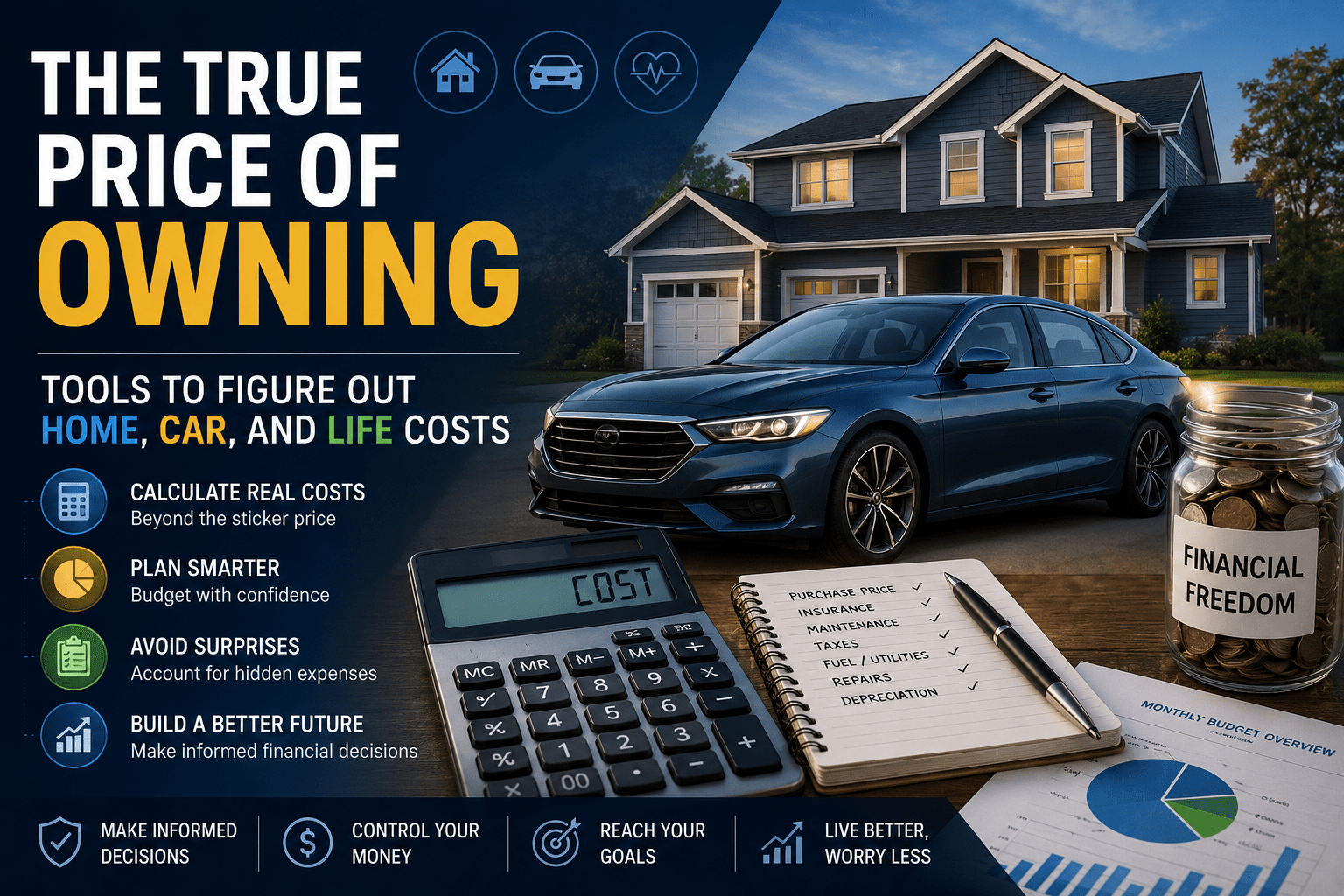
Buying a home, purchasing a car, or upgrading your lifestyle often feels like a major milestone. Advertisements highlight affordable monthly payments, attractive financing offers, and exciting features that make ownership seem simple. However, the purchase price is only one part of the financial picture.
The real cost of ownership includes ongoing expenses that continue long after the initial payment. Mortgage interest, property taxes, insurance premiums, fuel costs, maintenance, repairs, healthcare expenses, utility bills, subscriptions, and inflation all contribute to the total amount you’ll spend over the years.
Many people focus only on what they can afford today instead of considering what ownership will cost over five, ten, or even twenty years. This approach can lead to financial stress, unexpected debt, and difficulty achieving long-term goals.
Fortunately, modern budgeting apps, financial calculators, and cost-planning tools make it easier than ever to understand the complete financial picture before making major decisions.
In this guide, we’ll explore the hidden costs of ownership, discuss the best tools for calculating expenses, and share practical strategies to help you make informed financial choices.
Understanding the True Cost of Ownership
Ownership extends far beyond the purchase price. Every major asset or lifestyle decision comes with recurring costs that should be included in your financial planning.
For example, buying a home means paying for:
- Mortgage payments
- Property taxes
- Homeowners insurance
- Utility bills
- Routine maintenance
- Repairs and renovations
- Furniture and appliances
- Home security
- Landscaping
- Emergency repairs
Similarly, owning a vehicle involves much more than the monthly loan payment.
Drivers must also budget for:
- Fuel
- Insurance
- Registration fees
- Oil changes
- Tire replacement
- Routine servicing
- Unexpected repairs
- Parking costs
- Depreciation
Even everyday living expenses—such as groceries, internet, healthcare, childcare, and entertainment—can significantly affect your long-term financial stability.
Understanding these costs before making financial commitments helps prevent unpleasant surprises.
Why Many People Underestimate Ownership Costs
There are several reasons why buyers underestimate ongoing expenses.
Marketing Focuses on Monthly Payments
Advertisements often highlight low monthly installments while minimizing long-term costs.
For example:
“$399 per month”
Sounds affordable.
However, when interest, insurance, taxes, maintenance, and depreciation are included, the actual monthly cost may be considerably higher.
Unexpected Repairs
Homes and vehicles inevitably require maintenance.
Examples include:
- Roof replacement
- Plumbing issues
- HVAC repairs
- Engine problems
- Brake replacement
- Appliance failures
Without an emergency fund, these expenses can become financially overwhelming.
Lifestyle Inflation
As income grows, spending often increases.
People upgrade:
- Cars
- Homes
- Electronics
- Vacations
- Dining habits
- Subscription services
While each individual expense may seem manageable, together they can dramatically increase monthly obligations.
Ignoring Inflation
Inflation affects nearly every aspect of daily life.
Over time, costs increase for:
- Food
- Utilities
- Insurance
- Medical care
- Fuel
- Education
- Home repairs
Long-term financial planning should always account for rising prices.
The Hidden Costs of Homeownership
Buying a home is one of the largest financial commitments most people will ever make.
Beyond the purchase price, homeowners should prepare for ongoing expenses that are easy to overlook.
Property Taxes
Property taxes vary depending on location and property value. They can increase over time as home values rise or local tax rates change.
Home Insurance
Insurance protects your investment but also represents a recurring annual expense that should be included in your budget.
Maintenance
Financial experts often recommend setting aside approximately 1% to 3% of a home’s value each year for maintenance and repairs.
This may include:
- Roof maintenance
- Plumbing
- Electrical repairs
- Painting
- Landscaping
- Pest control
Utilities
Monthly utility expenses often include:
- Electricity
- Water
- Gas
- Internet
- Waste collection
Larger homes generally come with higher operating costs.
Renovations
Many homeowners eventually invest in:
- Kitchen upgrades
- Bathroom remodeling
- Flooring replacement
- Smart home technology
- Energy-efficient improvements
While these projects may increase property value, they also require careful financial planning.
The Real Cost of Car Ownership
A vehicle provides convenience and independence, but it also comes with ongoing financial responsibilities.
Depreciation
One of the largest ownership costs is depreciation.
Many vehicles lose a significant percentage of their value during the first few years of ownership.
This hidden cost is often overlooked because it isn’t paid directly each month.
Fuel Expenses
Fuel costs fluctuate throughout the year.
Factors affecting fuel expenses include:
- Vehicle efficiency
- Driving habits
- Fuel prices
- Commute distance
Choosing a fuel-efficient or hybrid vehicle can significantly reduce long-term expenses.
Insurance
Insurance premiums depend on factors such as:
- Age
- Driving history
- Vehicle type
- Coverage level
- Location
Comparing multiple insurance providers can help reduce annual costs.
Maintenance and Repairs
Routine maintenance includes:
- Oil changes
- Tire rotations
- Brake inspections
- Battery replacement
- Fluid changes
Ignoring regular maintenance often leads to more expensive repairs later.
Everyday Life Costs That Add Up
While homes and cars are major purchases, everyday expenses also play a significant role in long-term financial health.
Common recurring costs include:
- Groceries
- Healthcare
- Childcare
- Mobile phone plans
- Streaming subscriptions
- Gym memberships
- Internet services
- Dining out
- Entertainment
- Clothing
Individually, these expenses may seem manageable, but together they can consume a large portion of your monthly income.
Tracking these costs regularly helps identify unnecessary spending and opportunities to save.
Financial Tools That Make Better Decisions Easier
Modern financial technology gives individuals powerful resources to evaluate ownership costs before making important purchases.
Budget Calculators
Budget calculators help estimate:
- Monthly income
- Essential expenses
- Savings goals
- Debt payments
- Discretionary spending
They provide a clear picture of how much you can realistically afford.
Mortgage Calculators
Mortgage calculators estimate:
- Monthly payments
- Interest costs
- Loan duration
- Down payment impact
- Total borrowing cost
They allow buyers to compare different financing scenarios before committing.
Auto Loan Calculators
Car loan calculators help determine:
- Monthly payments
- Interest expenses
- Loan affordability
- Total repayment amount
This makes it easier to choose a vehicle that fits your budget.
Expense Tracking Apps
Expense trackers automatically categorize spending, helping users identify habits that may be affecting their financial goals.
Common categories include:
- Housing
- Transportation
- Food
- Healthcare
- Entertainment
- Shopping
Regular tracking encourages smarter financial decisions and improves budgeting accuracy.
Building a Long-Term Ownership Strategy
Successful ownership is about more than making a purchase—it is about planning for the years that follow.
Before buying any major asset, ask yourself:
- Can I comfortably afford the ongoing monthly costs?
- Do I have an emergency fund for unexpected expenses?
- Will this purchase still fit my budget if my income changes?
- Have I considered maintenance, insurance, and inflation?
- Will this investment support my long-term financial goals?
Answering these questions honestly can help you avoid unnecessary financial stress and build a more secure future.
How Technology Makes Financial Planning Easier
Managing personal finances no longer requires complex spreadsheets or hours of manual calculations. Modern financial tools provide real-time insights into spending habits, future expenses, and long-term affordability.
Whether you’re planning to buy your first home, finance a vehicle, or simply improve your monthly budget, digital tools help eliminate guesswork and support smarter financial decisions.
Expense Tracking Apps
Expense tracking applications automatically categorize transactions, allowing users to see exactly where their money goes each month.
Benefits include:
- Identifying unnecessary spending
- Creating realistic budgets
- Monitoring monthly cash flow
- Tracking savings progress
- Setting financial goals
Consistently reviewing spending habits is one of the simplest ways to improve financial health.
Building an Emergency Fund
Unexpected expenses are inevitable.
A leaking roof, a broken transmission, or an unexpected medical bill can quickly disrupt your finances if you’re unprepared.
Financial experts generally recommend maintaining an emergency fund that covers three to six months of essential living expenses.
An emergency fund provides:
- Financial security
- Reduced stress
- Greater flexibility
- Less reliance on high-interest debt
- Confidence during economic uncertainty
Treat your emergency savings as a financial safety net rather than an optional expense.
Smart Budgeting Strategies for Long-Term Ownership
Owning valuable assets becomes much easier when supported by a realistic budget.
Follow the 50/30/20 Rule
One popular budgeting strategy divides income into three categories:
50% – Needs
- Housing
- Utilities
- Food
- Transportation
- Insurance
30% – Wants
- Entertainment
- Dining out
- Shopping
- Travel
- Hobbies
20% – Savings and Debt Repayment
- Emergency fund
- Retirement savings
- Investments
- Extra loan payments
This simple framework helps balance current spending with future financial security.
Review Your Budget Regularly
Financial situations change over time.
Review your budget whenever:
- Your income changes
- You move to a new home
- You purchase a vehicle
- Insurance premiums increase
- Family expenses grow
Keeping your budget updated ensures it continues to reflect your financial reality.
Common Financial Mistakes to Avoid
Even well-planned purchases can become expensive if common mistakes are overlooked.
Buying Beyond Your Means
Avoid stretching your budget simply to purchase a larger home or more expensive vehicle.
Choosing an affordable option today often provides greater financial freedom tomorrow.
Ignoring Maintenance Costs
Delaying routine maintenance usually results in higher repair costs later.
Preventive maintenance saves money over the long term.
Financing for Too Long
Long loan terms may reduce monthly payments but often increase the total amount of interest paid over the life of the loan.
Always compare the total cost—not just the monthly payment.
Not Comparing Insurance Quotes
Insurance rates vary significantly between providers.
Comparing multiple quotes before purchasing coverage can lead to substantial annual savings.
Forgetting Opportunity Cost
Every major purchase affects your ability to save or invest elsewhere.
Before making a large financial commitment, consider whether the money could generate greater long-term value through investing or debt reduction.
Why Financial Calculators Are Essential
Financial calculators help transform complex decisions into clear, understandable numbers.
Some of the most useful calculators include:
- Mortgage Calculator
- Auto Loan Calculator
- Savings Calculator
- Compound Interest Calculator
- Budget Planner
- Loan Repayment Calculator
- Retirement Calculator
- Inflation Calculator
- Net Worth Calculator
- Emergency Fund Calculator
These tools allow users to compare different scenarios before making important financial decisions.
For example, increasing a down payment, choosing a shorter loan term, or making extra monthly payments can significantly reduce overall ownership costs.
Benefits of Planning Before You Buy
Taking time to calculate the true cost of ownership offers several long-term advantages.
Better Financial Confidence
Knowing exactly what to expect reduces uncertainty and helps you make informed decisions.
Reduced Debt
Careful planning lowers the risk of borrowing more than you can comfortably repay.
Improved Savings
Tracking expenses makes it easier to identify areas where money can be redirected toward savings and investments.
Greater Peace of Mind
Financial preparedness reduces stress during unexpected situations.
Long-Term Wealth Building
Making informed purchasing decisions allows you to allocate more money toward investments, retirement, education, or future opportunities.
How Deshmaj Tools Can Help
At Deshmaj Tools, we believe that informed decisions lead to stronger financial futures.
Whether you’re buying your first home, financing a new vehicle, planning monthly expenses, or building long-term wealth, reliable calculators and budgeting tools simplify complex financial decisions.
Using easy-to-understand financial tools can help you:
- Estimate ownership costs
- Compare loan options
- Plan monthly budgets
- Calculate savings goals
- Understand long-term affordability
- Improve financial confidence
Small financial decisions made today often create significant benefits in the future.
Conclusion
The true price of ownership goes far beyond the sticker price of a house, car, or lifestyle purchase. Ongoing expenses such as maintenance, insurance, taxes, utilities, fuel, and inflation all contribute to the total cost over time. Ignoring these hidden costs can lead to financial strain, while understanding them empowers you to make smarter, more sustainable decisions.
Fortunately, today’s financial calculators and budgeting tools make it easier than ever to estimate expenses, compare options, and plan for the future. Whether you’re preparing to buy a home, finance a vehicle, or simply manage your everyday budget more effectively, taking the time to calculate the full cost of ownership can save you money and reduce financial stress.
Remember, successful ownership isn’t about buying the most expensive asset—it’s about choosing what fits your long-term financial goals. By combining careful planning, disciplined budgeting, and the right financial tools, you can enjoy the benefits of ownership while building lasting financial security.
Frequently Asked Questions
Q1. What does the “true cost of ownership” mean?
The true cost of ownership includes the purchase price plus all ongoing expenses such as maintenance, insurance, taxes, utilities, fuel, repairs, depreciation, and financing costs.
Q2. Why should I calculate ownership costs before buying?
Calculating ownership costs helps you understand whether you can comfortably afford an asset over the long term, reducing the risk of financial stress and unexpected expenses.
Q3. Which financial tools are most useful for planning?
Some of the most valuable tools include mortgage calculators, auto loan calculators, budget planners, savings calculators, retirement calculators, inflation calculators, and expense trackers.
Q4. How much should I save for home maintenance?
A common guideline is to set aside 1% to 3% of your home’s value each year for routine maintenance and unexpected repairs.
Q5. What is the biggest hidden cost of owning a car?
Depreciation is often the largest hidden expense, followed by insurance, fuel, maintenance, repairs, and registration fees.
Q6. How can budgeting apps improve my finances?
Budgeting apps automatically track spending, categorize expenses, monitor savings goals, and provide insights that help you make smarter financial decisions.
Q7. How much should I keep in an emergency fund?
Most financial experts recommend saving enough to cover three to six months of essential living expenses, although your ideal amount depends on your income stability and personal circumstances.
Q8. Can financial calculators really save money?
Yes. Financial calculators help compare loans, estimate long-term costs, evaluate repayment strategies, and make better financial decisions, potentially saving thousands over time.


Leave a Reply