

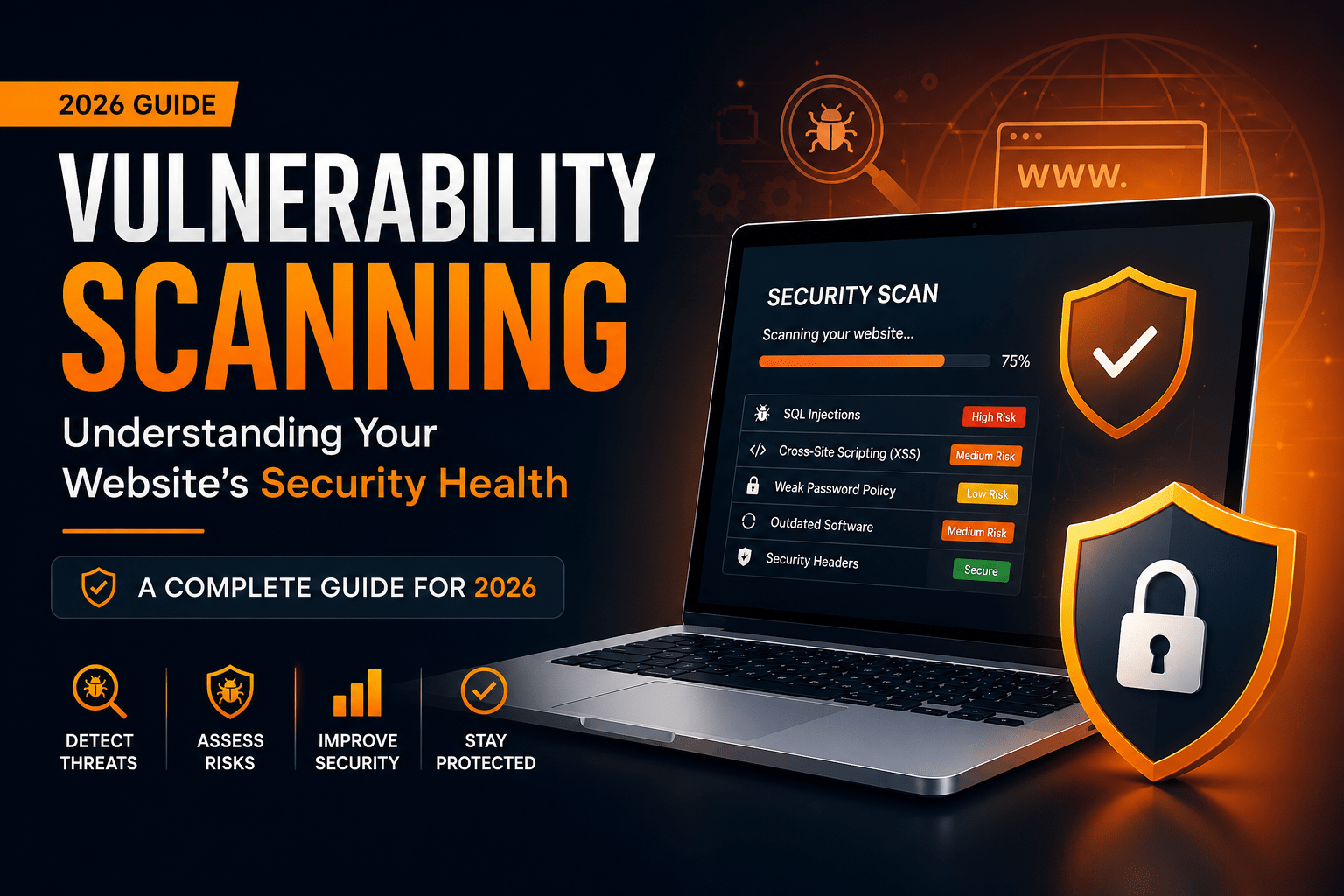
In an era where a single data breach can cost businesses an average of $4.88 million (IBM, 2024), understanding your website’s security health isn’t optional—it’s survival. Whether you run a personal blog, an e-commerce empire, or a corporate portal, vulnerability scanning is the frontline defense that separates secure websites from tomorrow’s headline. This comprehensive guide dives deep into what vulnerability scanning is, why it matters, how it works, and how you can implement it effectively to protect your digital assets, your users, and your reputation.
What Is Vulnerability Scanning?
Vulnerability scanning is the automated process of identifying security weaknesses in your website, web applications, servers, and network infrastructure. Think of it as a comprehensive health checkup for your digital presence. Just as a doctor uses diagnostic tools to detect diseases before symptoms appear, vulnerability scanners probe your systems to find exploitable flaws before malicious actors do.
These scanners use extensive databases of known vulnerabilities—such as the Common Vulnerabilities and Exposures (CVE) list maintained by MITRE—to compare your system’s configuration, software versions, and code against documented security flaws. When a match is found, the scanner flags it, often with severity ratings and remediation guidance.
According to CISA (Cybersecurity and Infrastructure Security Agency), vulnerability management is a critical component of any organization’s cybersecurity strategy. CISA emphasizes that regular scanning helps organizations “identify, prioritize, and remediate vulnerabilities before they can be exploited” [^1].
Why Vulnerability Scanning Is Non-Negotiable in 2026
The digital threat landscape has evolved dramatically. Here’s why vulnerability scanning has moved from “nice-to-have” to “absolutely essential”:
1. The Explosion of Web-Based Attacks
Web applications remain the primary attack vector. The OWASP Foundation consistently identifies injection flaws, broken authentication, and security misconfigurations among the top threats facing web applications today [^2]. With over 1.13 billion websites globally (Internet Live Stats, 2026), the attack surface has never been larger.
2. Regulatory Compliance Requirements
Governments worldwide have tightened data protection laws. The General Data Protection Regulation (GDPR) in Europe, the California Consumer Privacy Act (CCPA), and industry standards like PCI DSS (Payment Card Industry Data Security Standard) mandate regular security assessments. Failure to comply can result in fines reaching 4% of global annual revenue under GDPR.
The PCI Security Standards Council explicitly requires quarterly vulnerability scans for organizations handling credit card data [^3].
3. The Cost of a Breach Keeps Rising
IBM’s annual Cost of a Data Breach Report reveals that the average time to identify and contain a breach is 277 days. Organizations with automated security tools—including vulnerability scanners—reduce breach lifecycles by 108 days on average, saving millions in associated costs [^4].
4. Zero-Day Vulnerabilities Are Increasing
While known vulnerabilities dominate attack statistics, zero-day exploits—flaws unknown to vendors and the public—are on the rise. Google Project Zero reported a significant uptick in zero-day discoveries across major platforms. Regular scanning, combined with threat intelligence, helps organizations patch systems rapidly when new vulnerabilities emerge.
Types of Vulnerability Scanning
Not all scans are created equal. Understanding the different types helps you choose the right approach for your needs:
1. Network Vulnerability Scanning
This scans your network infrastructure—routers, firewalls, servers, and connected devices—for open ports, misconfigurations, and outdated services. Tools like Nessus, OpenVAS, and Qualys excel here.
2. Web Application Scanning (DAST)
Dynamic Application Security Testing (DAST) scans running web applications from the outside, simulating hacker behavior. It identifies issues like SQL injection, cross-site scripting (XSS), and insecure direct object references. Popular tools include OWASP ZAP, Burp Suite, and Acunetix.
3. Static Application Security Testing (SAST)
SAST analyzes source code without executing it, catching vulnerabilities during development. Tools like SonarQube, Checkmarx, and Fortify integrate into CI/CD pipelines for “shift-left” security.
4. Container and Cloud Scanning
With cloud-native architectures dominating 2026, scanning Docker containers, Kubernetes clusters, and cloud configurations is vital. Tools like Trivy, Aqua Security, and cloud-native solutions from AWS, Azure, and Google Cloud fill this gap.
5. API Security Scanning
APIs are the backbone of modern web applications. Specialized scanners like Postman (with security extensions) and 42Crunch identify broken authentication, excessive data exposure, and rate limiting issues in APIs.
How Vulnerability Scanning Works: The Technical Process
Understanding the mechanics helps you interpret results and optimize your scanning strategy:
Step 1: Discovery and Asset Inventory
The scanner first maps your digital footprint—identifying domains, subdomains, IP addresses, open ports, and running services. This reconnaissance phase is crucial; you can’t secure what you don’t know exists.
Step 2: Vulnerability Detection
Using signature-based detection, the scanner compares discovered assets against its vulnerability database. It checks:
- Software versions against known CVE entries
- Configuration files for security misconfigurations
- Input fields for injection vulnerabilities
- SSL/TLS certificates for expiration and weak ciphers
- Headers and cookies for security policy gaps
Step 3: Exploitation Verification (Optional)
Advanced scanners attempt safe, non-destructive exploitation to confirm vulnerabilities aren’t false positives. This “proof of concept” approach increases accuracy but requires careful handling in production environments.
Step 4: Reporting and Prioritization
Results are compiled into reports with CVSS scores (Common Vulnerability Scoring System), severity ratings (Critical, High, Medium, Low), and remediation guidance. Modern tools integrate with ticketing systems like Jira for streamlined patching workflows.
Top Vulnerability Scanning Tools for 2026
The market offers solutions for every budget and technical level:
For Enterprises
- Qualys VMDR: Cloud-based, comprehensive vulnerability management with asset discovery and threat prioritization.
- Rapid7 InsightVM: Strong reporting and risk-based prioritization.
- Tenable.sc: Excellent for large-scale network scanning.
For SMBs and Developers
- Nessus Essentials: Free for home use; affordable professional tiers.
- OWASP ZAP: Completely free, open-source web app scanner backed by the security community.
- Burp Suite Community: Industry-standard proxy and scanner for manual and automated testing.
For Cloud-Native Teams
- Trivy: Lightweight container and filesystem scanner.
- Snyk: Developer-friendly platform covering code, dependencies, containers, and infrastructure as code.
The SANS Institute, a leading cybersecurity training organization, recommends combining automated scanning with manual penetration testing for comprehensive coverage [^5].
Best Practices for Effective Vulnerability Scanning
Having tools isn’t enough. Follow these proven strategies:
1. Scan Regularly and Consistently
Set up automated scans at least weekly for external-facing assets and monthly for internal systems. After any major deployment or configuration change, trigger immediate scans.
2. Prioritize Based on Risk
Not all vulnerabilities demand immediate action. Use risk-based prioritization considering:
- Exploitability (Is there a known exploit in the wild?)
- Asset criticality (Does this server hold customer data?)
- Exposure (Is it internet-facing or internal?)
3. Validate and Remediate
Scan results require human validation. False positives are common. Establish a clear remediation workflow with defined SLAs:
- Critical: Patch within 24-48 hours
- High: Patch within 1 week
- Medium: Patch within 1 month
- Low: Address in next maintenance window
4. Integrate into DevSecOps
“Shift security left” by embedding scanners into your CI/CD pipeline. Tools like GitHub Advanced Security, GitLab Secure, and Snyk automatically scan code commits and block deployments with critical vulnerabilities.
5. Maintain an Asset Inventory
You can’t scan what you don’t know about. Use CMDBs (Configuration Management Databases) or automated asset discovery tools to maintain an accurate inventory of all digital assets.
Common Vulnerabilities Found by Scanners
Understanding what scanners typically find helps you anticipate issues:
| Vulnerability | Description | Risk Level |
|---|---|---|
| SQL Injection | Malicious SQL commands injected via input fields | Critical |
| Cross-Site Scripting (XSS) | Injection of client-side scripts into web pages | High |
| Outdated Software | Running unpatched CMS, plugins, or frameworks | High |
| Insecure SSL/TLS | Weak cipher suites, expired certificates | Medium-High |
| Missing Security Headers | Absence of HSTS, CSP, X-Frame-Options | Medium |
| Directory Traversal | Unauthorized access to file system | High |
| Information Disclosure | Exposing sensitive data in error messages | Medium |
The National Vulnerability Database (NVD) maintained by NIST is the authoritative source for CVE details and CVSS scoring [^6].
The Human Element: Beyond Automated Scanning
While vulnerability scanners are powerful, they aren’t infallible. They excel at finding known vulnerabilities but struggle with:
- Business logic flaws
- Complex authentication bypasses
- Zero-day vulnerabilities
- Social engineering vectors
This is why penetration testing and bug bounty programs remain essential complements. Organizations like HackerOne and Bugcrowd connect companies with ethical hackers who think like attackers, finding issues automated tools miss.
The EC-Council, creator of the Certified Ethical Hacker (CEH) certification, advocates for a layered security approach combining automated tools with human expertise [^7].
Vulnerability Scanning vs. Penetration Testing
Many confuse these terms. Here’s the distinction:
| Aspect | Vulnerability Scanning | Penetration Testing |
|---|---|---|
| Approach | Automated, broad coverage | Manual, deep dive |
| Frequency | Continuous/regular | Periodic (quarterly/annually) |
| Cost | Lower, scalable | Higher, resource-intensive |
| Depth | Surface-level identification | Exploitation and impact analysis |
| Best For | Baseline security, compliance | Critical systems, high-risk environments |
Both are necessary. Scanning provides continuous monitoring; penetration testing validates your defenses against sophisticated adversaries.
Future Trends in Vulnerability Scanning
As we progress through 2026, several trends are reshaping the landscape:
1. AI-Powered Scanning
Machine learning algorithms now predict vulnerability exploitation likelihood and prioritize patches based on real-world threat intelligence. Tools like Vulcan Cyber and Kenna Security (now part of Cisco) leverage AI for risk-based prioritization.
2. Continuous Attack Surface Management (CASM)
Modern platforms don’t just scan periodically—they continuously monitor your attack surface, alerting you to new assets, shadow IT, and emerging threats in real-time.
3. SBOM (Software Bill of Materials) Integration
Following Executive Order 14028 in the U.S., SBOMs are becoming standard. Scanners now ingest SBOMs to precisely identify vulnerable components in your software supply chain.
4. Consolidated Security Platforms
Organizations are moving from point solutions to unified platforms combining vulnerability management, cloud security posture management (CSPM), and threat detection.
Conclusion
Vulnerability scanning isn’t a one-time checkbox—it’s a continuous commitment to your website’s security health. In 2026’s threat landscape, where attackers deploy automated tools to probe thousands of sites daily, your defense must be equally automated and relentless.
Start with a clear asset inventory. Choose scanning tools aligned with your infrastructure and budget. Establish regular scanning schedules, prioritize findings based on actual risk, and integrate security into your development lifecycle. Remember: the cost of prevention is always a fraction of the cost of a breach.
Your website is often your first impression, your storefront, and your brand ambassador. Protecting it isn’t just an IT task—it’s a business imperative. By embracing vulnerability scanning as a core practice, you’re not just fixing holes; you’re building trust with every visitor who lands on your site.
Ready to assess your website’s security posture? Explore our suite of security and development tools at Deshmaj Tools to keep your digital presence resilient, compliant, and trustworthy.
References and External Links
- Cybersecurity and Infrastructure Security Agency (CISA). “Vulnerability Management.”
- OWASP Foundation. “OWASP Top Ten.”
- PCI Security Standards Council. “PCI DSS Requirements and Security Assessment Procedures.”
- IBM Security. “Cost of a Data Breach Report 2024.
- SANS Institute. “Vulnerability Management and Scanning.”
- National Institute of Standards and Technology (NIST). “National Vulnerability Database.”
- EC-Council. “Certified Ethical Hacker (CEH).”
Additional Resources:


Leave a Reply